

Buying a shipping container in Kenya, to use convert into an office, home, storage unit, retail shops, or any intended use, is a smart investment. This is because containers have been designed for heavy use and durability, capable of withstanding, any, and all weather. They are also quite flexible and adaptable in terms of modifications to meet a client’s specific needs. When making the decision to buy containers, customers must always make careful consideration and evaluation of who their supplier will be. They also need to factor in the condition of the container, its price, and the purpose of their purchase. This is important because there are different options available in the market, and it is important to avoid avoidable costs, by making the right decisions, and getting value for money.
Table of Contents
- Choose a Highly Reputable Supplier
- Understand Container Grading and Condition
- Inspecting Size, Type, and Build Quality
- Considering the Full Cost
- Guard Against Scams
- Prioritize Proper Documentation
- Match Purpose with Container Features
- Seek Final Agreement with Clear Deliverables
- Summary
1. Choose a Highly Reputable Supplier
Key among the decisions to make when it comes to buying a container is, selecting the right supplier. There are several suppliers out there, but not all of them are trusted, or transparent. It is always important to work with suppliers that have a physical location, and a container yard that can be inspected by the customers at any time, when they are seeking to purchase container(s) that best suit their needs. This is important to protect you, the customers from fraudulent sellers who often use photos of containers that they do not have, to woo in, unsuspecting clients to purchase containers at high costs, when they themselves, purchase from the trusted suppliers directly. Other than having physical prescence, the trusted suppliers also have trusted and verified platforms including websites and social media pages, where clients can view a catalogue of their products and services, along with their prices, as well as their contact details and customer reviews. A transparent company that sells used shipping containers will not hesitate to share testimonials, project case studies, and proof of previous work. If possible, ask around for referrals from past clients who have purchased containers successfully.

2. Understand Container Grading and Condition
Shipping containers are typically classified into grades, and it is important for the clients to know these categories, so that they can be able to buy containers that best match their project and needs. It is important to note that industry-standard grading terms such as Cargo-Worthy which means the container can still be used for international shipping, Wind and Water Tight which assures the container is sealed but may not meet shipping standards, and As-Is, all inform expectations on structural soundness.
GOOD NEWS: Structural repairs can be made to any category of the containers so that they can be customized to meet the demands and expectations of the customers. This includes fabrications and paintings.
Below is a summary of the different grades of containers.
| GRADE | CONDITION |
| Grade A | Near-new containers. They are often referred to as “one-trip” units. They have excellent structural integrity, plus they are wind- and watertight, with minimal or no dents at all. They are ideal for high-standard projects such as container homes, offices, and or retail shops. |
| Grade B | Containers that show signs of use. They have signs such as faded paint, or minor dents, but are still structurally sound and watertight. They are the most ideal in terms of affordability and durability, making them suitable for storage, workshops, and even retail stalls. |
| Grade C | Heavily used containers, may have visible repairs, rust, or wear. These are the most affordable but are best suited containers for basic, short-term storage or low-visibility applications. |

3. Inspecting Size, Type, and Build Quality
Inspecting of containers before making a purchase is very important to inspect the actual size, type and build quality of the containers.
- The most common sizes are 20-foot standard and 40-foot standard units.
- This is while a 40-foot-high cube offer additional foot of height, and are suitable for projects needing extra space.
Other than the standardized models, there are also some specialized container options such as:
- Open-top containers (for bulky items);
- Refrigerated containers (for perishable goods);
- Side-opening units (for easier access).
It is important for clients to inspect the structural integrity of containers before committing to any purchase. They should inspect:
- Flooring for signs of rot,
- Doors for proper sealing, and
- Walls for corrosion or leaks.
If a client wants to convert the container into a living or working space, then structural soundness becomes even more critical since modifications will put additional stress on the frame.

4. Considering the Full Cost
Beyond Purchase Price
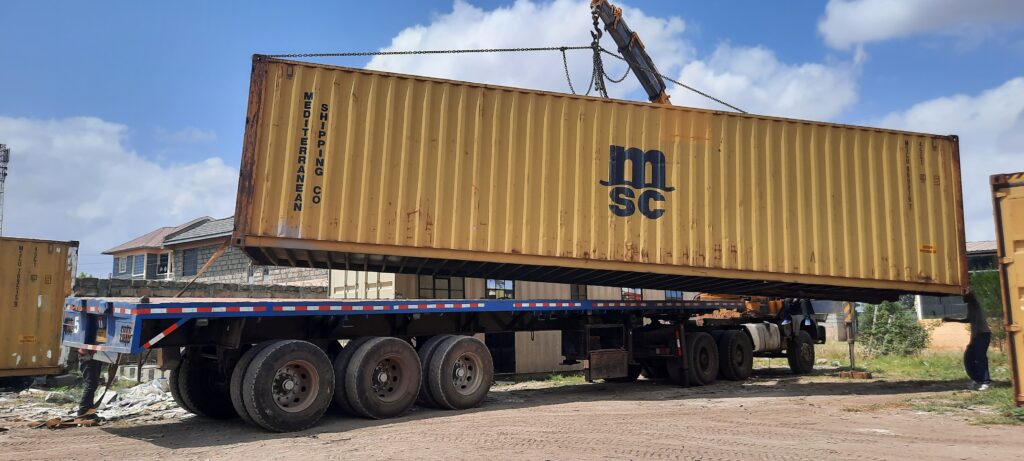
The listed price of a container is rarely the final cost. Buyers should take into account additional expenses such as fabrication, transportation, crane offloading, and site preparation costs. To avoid surprises, buyers need to request a list of full, itemized quotation that details purchase price, delivery, installation, and any customization work. At Platinum Containers, we offer this transparency enabling out customers compare our rates with that of other suppliers, on equal terms for them to find out by themselves that our prices are unbeatable. Our itemized quote often details each cost, thereby ensuring that clients avoid surprise expenses.
5. Guard Against Scams
Unfortunately, just like in other parts of the world, container scams are common in Kenya. This is especially when dealing with online sellers. This is why we encourage our clients to visit our yard, and make physical inspections of the containers personally. Buyers need to protect themselves by following the simple guidelines below:
- Never pay the full purchase price before physically inspecting the container in person, or confirming delivery.
- Verify the legitimacy of the supplying company by checking their registration status, business permits, and whether they operate from a verifiable yard.
- Be wary of prices that are significantly lower than market rates. As the saying goes, ‘if a deal looks too good to be true, it usually is.’

6. Prioritize Proper Documentation
- Ensure the container comes with necessary documentations, like interchange documents (Commonly refereed to as container logbooks) and registration plates.
- This legal backing helps with ownership transfer, permits, and future resale.
7. Match Purpose with Container Features
Not all containers are suitable for the same purpose. Aligning the container grade and features with intended use ensures that buyers maximize value. It is vital to consider the long-term needs of the project involving the container. Also consider compatibility of the container with the planned modifications and fabrications. For instance, can it handle welding, cutting for doors, ventilators and or windows, insulation, electrical work, and installation of utilities.
| Use Case | Recommended Grade | Must-Have Features |
| Display / Retail | Grade A | Clean exterior, watertight, secure doors |
| Storage / Site Use | Grade B | Functional, watertight, budget-friendly |
| Temporary Storage | Grade C | Cost-effective, basic utility, repairable as needed |
| Conversion/Home | Grade A or B | Structurally sound, good floor, less repair overhead |

8. Seek Final Agreement with Clear Deliverables
Before finalizing a purchase, ensure all details are documented in a written agreement. This should include:
- Container grade,
- Size,
- Purchase price,
- Delivery cost and timeline,
- Offloading responsibility,
- Site preparations, and
- warranty terms if applicable.
If the container is to be modified, make sure design specifications and material requirements are clearly listed in advance.
Summary
Buying a shipping container in Kenya requires more than just looking at the price. A reputable supplier, thorough inspection, and proper documentation are critical to securing a reliable unit. Consider the grade, size, and type of container in relation to your project, and always factor in delivery and modification costs. Protect yourself from scams by avoiding full upfront payments and insisting on legal paperwork. Finally, compare offers, negotiate where possible, and document agreements clearly to prevent future disputes.
Ready to move forward? At Platinum Containers, we support your decision-making offering trusted solutions, tailored to your needs, whether you’re seeking storage, conversions, or business-use containers. With transparent pricing, on-site inspections, and expert guidance, we help you make a secure and informed decision that adds lasting value.


